Can a Crack Cocaine Baby Grow Up With Anxiety Problems
Prenatal cocaine exposure (PCE), theorized in the 1970s, occurs when a pregnant woman uses cocaine and thereby exposes her fetus to the drug. Babies whose mothers used cocaine while significant supposedly have increased chance of several different health problems during growth and development.[ane]
"Scissure baby" was a term coined to describe children who were exposed to crack (freebase cocaine in smokable grade) as fetuses; the concept of the scissure baby emerged in the US during the 1980s and 1990s in the midst of a crack epidemic.[2] Other terms are "cocaine baby" and "cleft kid". Early studies reported that people who had been exposed to crack in utero would be severely emotionally, mentally, and physically disabled; this belief became common in the scientific and lay communities.[2] Fears were widespread that a generation of crack babies was going to put severe strain on society and social services every bit they grew up. Later studies failed to substantiate the findings of earlier ones that PCE has astringent disabling consequences; these before studies had been methodologically flawed (eastward.g. with small sample sizes and confounding factors). Scientists have come to understand that the findings of the early studies may take been overstated.[2]
No specific disorders or weather have been found to result for people whose mothers used cocaine while pregnant.[3] Studies focusing on children of half dozen years and younger take non shown whatsoever direct, long-term effects of PCE on language, growth, or development as measured by test scores.[4] PCE besides appears to have little result on infant growth.[5] However, PCE is associated with premature birth, nascence defects, attention deficit hyperactivity disorder, and other atmospheric condition. The effects of cocaine on a fetus are thought to be similar to those of tobacco, and are less astringent than those of alcohol.[6] No scientific evidence has shown a deviation in harm to a fetus betwixt scissure and powder cocaine.[seven]
PCE is very difficult to written report because it very rarely occurs in isolation; usually information technology coexists with a variety of other factors, which may derange a report's results.[4] Thus, studies have failed to conspicuously testify that PCE has negative cerebral furnishings, partly because such effects may be due to concurrent factors.[viii] Pregnant mothers who use cocaine, often use other drugs in improver, or they may be malnourished and defective in medical care. Children in households where cocaine is abused are at risk of violence and neglect, and those in foster intendance may experience bug due to unstable family unit situations. Factors such as poverty that are frequently associated with PCE have a much stronger influence on children's intellectual and academic abilities than does exposure to cocaine in isolation.[ix] Thus, researchers take had difficulty in determining which effects result from PCE and which consequence from other factors in the children's histories.
Historical context [edit]

The US regime published posters similar this ane in the 1980s and 1990s to warn people away from cleft.
During 1980s and 1990s, a surge occurred in use of crack cocaine in United states cities:[10] the crack epidemic. During this time, fears arose throughout the country that PCE would create a generation of youth with astringent behavioral and cognitive problems.[11] [12] Early studies in the mid-1980s reported that cocaine utilise in pregnancy caused children to accept astringent problems, including cerebral, developmental, and emotional disruption.[13] These early on studies had methodological problems, including pocket-size sample size, confounding factors such equally poor nutrition, and utilise of other drugs past the mothers.[13] The results of the studies, though, sparked widespread media discussion in the context of the new State of war on Drugs.[14] [1] For example, a 1985 written report that showed harmful effects of cocaine employ during pregnancy created a huge media fizz.[13] [xv] The term "crack baby" resulted from the publicity surrounding crack and PCE.[xvi]
Media reports commonly emphasized that babies who had been exposed to cleft in utero would never develop usually.[12] [16] The children were reported to exist inevitably destined to be physically and mentally disabled for their whole lives.[2] Babies exposed to fissure in utero were written off as doomed to exist severely disabled, and many were abased in hospitals.[17] They were expected to be unable to form normal social bonds.[12] Experts foresaw the development of a "biological underclass" of born criminals who would casualty on the rest of the population.[15] [17] [18] Crime rates were predicted to ascension when the generation of crack-exposed infants grew up (instead, they dropped).[17] The children were predicted to be difficult to console, irritable, and hyperactive, putting a strain on the schoolhouse system.[5] Charles Krauthammer, a columnist for The Washington Post wrote in 1989, "[t]heirs will be a life of sure suffering, of probable deviance, of permanent inferiority."[15] [17] The president of Boston University at the time, John Silber, said, "crack babies ... won't ever achieve the intellectual development to take consciousness of God."[17] [eighteen] These claims of biological inferiority played easily into existing class and racial biases. Reporting was frequently sensational, favoring the direst predictions and shutting out skeptics.[eighteen]
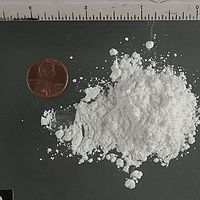

Powder (left) and crack cocaine (right)
Reporting on the effects of PCE may have been affected by publication bias, a asymmetric publication of studies indicating more severe outcomes every bit the crack epidemic emerged.[19] Scientific studies that report that PCE has significant effects may be more than likely to be published than those that exercise not.[20] Between 1980 and 1989, 57% of studies showing cocaine has effects on a fetus were accepted by the Society for Pediatric Enquiry, compared with simply 11% of studies showing no effects.[21] Findings that other factors such as prematurity were backside symptoms that cocaine-exposed babies showed did not "fit within the narrative of what had become a national scare" and were given less attending.[22] Ideas about severe effects of PCE may take been more readily embraced because they "fit in with cultural stereotypes".[22]
At the fourth dimension, the proposed machinery past which cocaine harmed fetuses was as a stimulant— cocaine was predicted to disrupt normal evolution of parts of the brain that dealt with stimulation, resulting in issues such as bipolar disorder and attention arrears disorder.[2] Reports from the mid-1980s to early '90s raised concerns well-nigh links between PCE and slowed growth, deformed limbs, defects of the kidneys and genitourinary and gastrointestinal systems, neurological damage, small head size, atrophy or cysts in the cerebral cortex, bleeding into the brain's ventricles, and obstruction of blood supply in the key nervous organisation.[19]
After the early on studies that reported that PCE children would be severely disabled came studies that purported to show that cocaine exposure in utero has no important effects.[17] Near every prenatal complication originally thought to be due directly to PCE was found to upshot from confounding factors such as poor maternal nutrition, apply of other drugs, depression, and lack of prenatal intendance.[23] More recently, the scientific customs has begun to accomplish an understanding that PCE does have some important furnishings, but that they are non severe as was predicted in the early on studies.[17] The effects of PCE are subtle but they be.[19] [24] [25] Most people who were exposed to cocaine in utero are normal or close to it.[12]
Pathophysiology [edit]
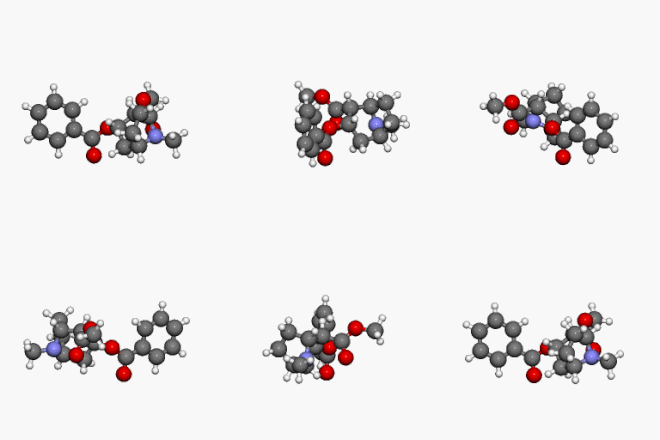
Cocaine is a small enough molecule to pass across the placental bulwark into the bloodstream of the fetus.[26]
Cocaine, a small molecule, is able to cross the placenta into the bloodstream of the fetus.[26] [27] In fact, it may exist present in a college concentration in the amniotic fluid than it is in the mother's bloodstream.[28] The skin of the fetus is able to absorb the chemic directly from the amniotic fluid until the 24th week of pregnancy.[28] Cocaine can also bear witness up in chest milk and affect the nursing baby.[28] [29] The severity of effects depends on how much of the drug is used, how often, and the phase in the development of the fetus.[xxx]
Cocaine prevents the reuptake of the neurotransmitters dopamine, serotonin, and norepinephrine.[xx] Thus, they stay in the synapse longer, causing excitement of the sympathetic nervous system and evoking a stress response.[21] The euphoria experienced by cocaine users is thought to be largely due to the way it prevents the serotonin from being reabsorbed past the presynaptic neuron that released it.[31] [one] [xx]
Utilise of cocaine during pregnancy can negatively bear on both the mother and the fetus,[21] but the ways in which it affects the fetus are poorly understood.[23] Three main mechanisms of cocaine exposure can harm a fetus, by altering brain chemistry, altering the expression of certain genes, and the constriction of blood vessels.[1] The neurotransmitters afflicted by cocaine are involved in the development of the fetus'south brain,[30] so the drug may affect fetal development directly by altering the development of the brain's monoaminergic arrangement.[32] The most important fashion cocaine affects fetal development is by binding to dopamine receptors.[12]
Some other possible mechanism by which cocaine harms the fetus may be in role by interfering with blood supply to the uterus.[28] [33] Cocaine causes vasoconstriction (narrowing of claret vessels) in both mother and fetus, which can crusade hypoxia in the fetus.[34] Constricting blood vessels causes tissues to receive insufficient blood menses, killing cells, but this effect is less pronounced with cocaine than with nicotine.[8] The reduction in blood flow to the uterus limits the delivery of oxygen and nutrients to the fetus.[16] Cocaine also constricts the blood vessels in the fetus, which is potentially linked to slowed fetal growth and abnormal development of the genitourinary, cardiovascular, digestive, and musculoskeletal systems.[30] Cocaine causes changes in the mother'southward claret pressure that are thought to be the cause of strokes in the fetus; ane report plant that 6% of cocaine-exposed infants had had i or more strokes.[28] Such prenatal strokes may be the crusade of neurological problems found in some cocaine-exposed infants later birth.[5] Blood vessel contraction can also cause premature labor and premature birth.[xvi] Cocaine has as well been found to enhance the contractility of the tissue in the uterus, another gene that has been suggested equally a possible mechanism for its contribution to increased prematurity rates.[33] Increased contractility of the uterus may also be behind the increased likelihood of placental abruption (the placenta tearing away from the uterine wall), which some findings take linked with PCE.[21]
Diagnosis [edit]
Cocaine use during pregnancy can exist discovered by request the mother, but sometimes women volition not admit to having used drugs.[35] Mothers may prevarication for fear of prosecution[35] or having their children taken abroad, but even when they are willing to tell the truth, their memories may not be very accurate.[8] Determining the purity of the drug they take taken also may not be possible.[36] More reliable methods for detecting cocaine exposure involve testing the newborn's pilus or meconium (the babe'southward earliest stool).[37] Hair analysis, however, can give false positives for cocaine exposure,[37] and a newborn may not have enough hair to examination.[8] The newborn'due south urine tin be tested for cocaine and metabolites, merely it must be collected every bit soon as possible later nascence.[36] It is not known how long afterwards exposure the markers will still show up in a newborn's urine.[35] The female parent'south urine can also be tested for drugs, but it cannot discover drugs used as well far in the by or determine how much or how often the drugs were used.[8] Tests cannot generally detect cocaine use over a week prior to sample drove.[35] Mothers are more honest near cocaine use when their urine is also tested, but many users still deny it.[35] Both maternal and neonatal urine tests tin can give false negatives.[35]
Effects and prognosis [edit]
Studies accept returned widely varying reports of the effects of PCE; some merits the physical disabilities are severe and generalized, others notice specific effects, others none all.[1] The timing of the dose of the drug is an important determinant of effect, in add-on to how much is used, for how long, and what kind of care is rendered later on birth.[one] Drug use in the commencement trimester is the most harmful to the fetus in terms of neurological and developmental consequence.[38] The effects of PCE later in a child'due south life are poorly understood; little data is bachelor near the effects of in utero cocaine exposure on children over the age of five.[4] Some studies have plant PCE-related differences in height and weight, while others take non; these differences are mostly either minor or are gone past the time children are of school age.[4] Much is withal not known almost what factors may exist to aid children who were exposed to cocaine in utero.[23] Whether the effects of PCE are increased once children reach adolescence is unknown, as is whether the neural rewiring that occurs during this developmental catamenia attenuates the furnishings.[xx] A review of 27 studies performed between 2006 and 2012 found that cognitive development was mildly to moderately affected in PCE adolescents, merely how important these effects were in practical terms was unclear.[20]
Unlike fetal alcohol syndrome, no set of characteristics has been discovered that results uniquely from cocaine exposure in utero.[23] Cocaine exposure in utero may affect the structure and function of the brain, predisposing children to developmental issues later, or these effects may be explained by children of crack-using mothers being at higher chance for domestic violence, deadbeat parenting, and maternal depression.[4] When researchers are able to identify furnishings of PCE, they are typically small.[23]
Pregnancy and birth [edit]

Studies have institute after controlling for other factors that some effects are present in pregnancies involving cocaine: abruptio placenta, prematurity, low nativity weight, and small size compared to babies of the aforementioned gestational time.[27] PCE newborns take smaller heads and shorter bodies.[9] [1] PCE effects are more than severe when the amounts of cocaine are greater.[27] As many as 17–27% of cocaine-using pregnant women deliver prematurely.[33] In association with prematurity, growth in the womb is reduced, and low nativity weight is continued to PCE.[20] Too, some data associate spontaneous ballgame with cocaine employ.[15] Cocaine reduces the appetite and has been linked with reduced maternal weight gain during pregnancy; in addition, constriction of the blood vessels may farther limit supply of nutrients to the fetus.[39] Using cocaine while pregnant also heightens the chances of maternal and fetal vitamin deficiencies, respiratory distress syndrome for the infant, and infarction of the bowels.[28] Early reports found that cocaine-exposed babies were at loftier take chances for sudden infant death syndrome;[19] however, past itself, cocaine exposure during fetal development has non afterwards been identified every bit a risk factor for the syndrome.[40] Some PCE children feel hypertonia (excessive muscle tone),[41] and reduced reflexes and motor function accept been constitute in babies four to six weeks old.[twenty]
While newborns who were exposed prenatally to drugs such every bit barbiturates or heroin ofttimes have symptoms of drug withdrawal (neonatal abstinence syndrome), this does not happen with babies exposed to scissure in utero; at least, such symptoms are difficult to separate in the context of other factors such as prematurity or prenatal exposure to other drugs.[sixteen]
Mental, emotional, and behavioral outcomes [edit]
Studies have shown small deficits in behavioral, cognitive, attention, emotional, and language function in PCE infants, children, and adolescents,[xx] just other studies attribute findings of negative effects on cerebral evolution to confounding factors.[8] Studies suggest that the environment in which a child grows up makes a more important contribution to outcome in cognitive, behavioral, and other outcomes than does the cocaine exposure itself.[9] School performance is mildly affected in older children.[27] In IQ studies, cocaine-exposed children do not appear to score lower than others.[i] Although PCE is correlated with depression IQ scores, scientists by and large believe that PCE alone does not cause this result; rather, it is more than probable due to associated factors.[9] In school-aged and younger children, PCE does not appear in studies to predispose children to poorer intellectual performance.[iv] Poor operation on IQ tests could actually be due to problem with sustaining attention if the tests fail to account for this factor separately.[8]
Cocaine causes impaired growth of the fetus'due south brain, an result that is most pronounced with high levels of cocaine and prolonged duration of exposure throughout all three trimesters of pregnancy.[41] Prenatal cocaine exposure has been found to bear upon the cognitive performance of individuals and affect speech and language evolution, behavior, physical and cerebral growth, and function. The more than of the substance the fetus is exposed to the more of an effect it can accept on the overall evolution as well as running the risk of being fatal to the fetus during the prenatal stage(southward) of pregnancy. The effects of cocaine uses can crusade for there to be an increased adventure of the baby being built-in premature, affecting the body weight, height and the growth of the organs and encephalon due to the premature state of the baby likewise as the touch of the harmful substances the baby was exposed to. This can have effects on other areas such as brain development, beingness exposed to a stimulant such as cocaine tin cause damage and problems in development over fourth dimension. In behavior, noesis, memory, grasping of information, and attention are areas that are common struggles for children that were exposed to cocaine in the womb. These furnishings are seen in individuals reaching the age of 10 and older. Long-term studies have shown that there are alterations made in the structure and office of the brain occur when exposed to these drugs with cause change in the behaviors of the individual over time and they develop and grow. All of the effects physically and cognitively all vary for each private based on their level of exposure to the drug, the gestational timing of the infant as it develops, determine some concrete consequence that might have occurred and the care they receive later beingness born.[1] Studies that apply neuroimaging such as magnetic resonance imaging (MRI) and FMRI have shown differences in brain structure of PCE children, for example in the cerebral cortex and limbic system.[1] Those PCE children who had slowed brain growth as fetuses are at higher risk for dumb brain growth and motor, language and attention problems after they are born.[41] Studies have found that children exposed to cocaine during fetal development feel problems with linguistic communication, behavior, development, and attending.[xx] [42] Nonetheless these effects are small-scale, particularly when studies control for other factors like exposure to other drugs.[20] Cognitive and attention skills can be impacted by PCE, possibly due to furnishings on encephalon areas such as the prefrontal cortex.[13] Brain areas in the frontal lobe involved in dealing with stress, attention, and impulsiveness seem to exist particularly impacted by PCE, equally evidenced past neuroimaging studies that show abnormalities in these areas of the brain.[ix] PCE infants have been shown to exist more than jittery and excitable and have lower arousal and cocky-regulation; such behavioral furnishings may persist or worsen after 12 months of historic period.[one] Children whose mothers used cocaine during pregnancy may develop symptoms akin to those of attention deficit disorder,[xiii] and a link has been found between the disorder itself and PCE.[43] Balmy deficits in language have been found in older PCE children.[27] Linguistic communication evolution is dumb, possibly into tardily adolescence, just adolescents upwardly to historic period 17 may improve their receptive linguistic communication skills.[ane]
Prove suggests that in utero cocaine exposure leads to problems with beliefs and sustained attention, possibly by affecting parts of the encephalon that are vulnerable to toxins during fetal development.[4] Schoolhouse-age PCE children have been establish to accept trouble regulating their behavior and sustaining their attention.[eight] Children who had been exposed to high levels of cocaine in utero testify poorer behavioral inhibition than those with lower levels of exposure or unexposed children.[9] The changes in behavior and attending caused past PCE are measurable by standardized scales;[41] however these behavioral effects seem to be balmy.[13] Children exposed to cocaine in the get-go trimester are less sociable, more than withdrawn, and show more anxious and depressed behaviors.[1] Those exposed to higher doses of cocaine have been reported to show ambitious and disruptive behaviors.[ane] PCE girls are seven times more than likely to have delinquent behavioral bug, simply PCE boys are no more likely than other boys.[43] Studies from the 2000s and 2010s are conflicted on whether PCE adolescents are at greater take a chance for use of drugs such as cocaine, alcohol, and marijuana.[xx] A 2010 written report institute that PCE adolescent girls were more likely to endure anxiety than their non-exposed peers.[20]
Physical outcomes [edit]
Slowed growth is well documented in fetuses, only it is non equally clear whether older children remain smaller or take hold of up to their peers.[1] Some studies evidence that growth remains slowed for equally many as ten years.[ix] [1] PCE may also interfere with the way the motor arrangement matures.[41] Motor effects that have been documented include poorer reflexes and quality of movement in infants.[ane] PCE may have an effect on the neuroendocrine organization, simply more study is needed to decide whether information technology does and what the effects are.[20]
A review of the literature reported that cocaine utilize causes congenital defects between xv and twenty% of the fourth dimension; nevertheless another large-scale study found no difference in rates of birth anomalies in PCE and non-PCE infants.[44] It has been suggested that some nascency defects could be due to cocaine's disruption of blood vessel growth.[44] Most PCE-related congenital defects are constitute in the brain, center, genitourinary tract, arms and legs.[44] Cocaine use by meaning mothers may direct or indirectly contribute to defects in the formation of the circulatory system and is associated with abnormalities in development of the aorta.[33] Centre malformations tin include a missing ventricle and defects with the septum of the heart, and can result in potentially deadly congestive heart failure.[31] Genital malformations occur at a higher-than-normal rate with PCE.[44] The liver and lungs are also at higher hazard for abnormalities.[31] Cloverleaf skull, a congenital malformation in which the skull has iii lobes, the brain is deformed, and hydrocephalus occurs, is also associated with PCE.[45] Like birth defects, pocket-sized head size, and stroke are risks in PCE.[46]
Epidemiology [edit]
Of all cocaine users, women of childbearing age comprise 15–17%.[27] An estimated 0.6 to 3% of pregnant women in the developed world use cocaine.[three] [12] A 1995 survey in the US found that between 30,000 and 160,000 cases of prenatal exposure to cocaine occur each year.[47] By one estimate, in the United states of america 100,000 babies are built-in each year subsequently having been exposed to crack cocaine in utero.[33] An estimated seven.5 1000000 PCE children are living in the US.[12] Pregnant women in urban parts of the United states and who are of a low socioeconomic condition apply cocaine more ofttimes.[32] However, the real prevalence of cocaine use past pregnant women is unknown.[23] [9]
Legal and ethical problems [edit]

Women take been prosecuted for using crevice while significant.
The harm to a child from PCE has implications for public policy and law. Some US states have pressed charges against pregnant women who utilise drugs, including assault with a deadly weapon, corruption of a minor, manslaughter, child abuse, and distribution of drugs to a small-scale.[48] Even so these approaches have by and large been rejected in the courts on the basis that a fetus is not legally a kid.[38] Betwixt 1985 and 2001, more than 200 women in over 30 United states states faced prosecution for drug use during pregnancy.[40] In South Carolina, a adult female who used crack in her third trimester of pregnancy was sentenced to prison for eight years when her child was born with cocaine metabolites in its system.[38] The Supreme Court of Due south Carolina upheld this conviction.[38] Every bit of 2013, all but i of the women prosecuted in the Usa for drug employ while pregnant accept won their cases on appeal.[48]
From 1989 to 1994, in the midst of public outcry almost cocaine babies, the Medical University of S Carolina tested pregnant women for cocaine, reporting those who tested positive to the police.[49] The US Supreme Court found the policy to be unacceptable on ramble grounds in 2001.[49] Some advocates debate that punishment for fissure-using pregnant women every bit a means to treat their addiction is a violation of their correct to privacy.[38] According to studies, fear of prosecution and having children taken away is associated with a refusal to seek prenatal care or medical treatment.[13]
Some nonprofit organizations aim to forestall PCE with birth control. One such initiative, Projection Prevention, offers women addicted to cocaine money as an incentive to undergo long-term nascence control or, oft, sterilization—an approach which has led to public outcry from those who consider this exercise to be eugenics.[50]
[edit]
Children who were exposed to crevice prenatally faced social stigma as babies and schoolhouse-aged children; some experts say that the "crack baby" stigma was more than harmful than the PCE.[15] Teachers were afflicted by these cultural stereotypes; such biases may have negatively afflicted the educational experiences of children thus stigmatized.[51] Teachers who knew that specific children had been exposed to crevice in utero may have expected these children to be disruptive and developmentally delayed.[40] Children who were exposed to cocaine might be teased by others who knew of the exposure, and issues these children had might be misdiagnosed past doctors or others as resulting from PCE when they may really have been due to factors similar illness or abuse.[11]
The social stigma of the drug besides complicated studies of PCE; researchers labored under the awareness that their findings would accept political implications.[11] In addition, the perceived hopelessness of 'crack babies' may have caused researchers to ignore possibilities for early intervention that could have helped them.[v] The social stigma may turn out to be a cocky-fulfilling prophecy.[52]
Enquiry [edit]
Confounding factors [edit]
A number of the furnishings that had been thought later early studies to be attributable to prenatal exposure to cocaine are actually due partially or wholly to other factors, such equally exposure to other substances (including tobacco, booze, or marijuana) or to the environment in which the child is raised.[44]
PCE is very difficult to study because of a multifariousness of factors that may confound the results: pre- and postnatal care may be poor; the pregnant mother and child may exist malnourished; the corporeality of cocaine a mother takes can vary; she may take a variety of drugs during pregnancy in addition to cocaine; measurements for detecting deficits may not be sensitive enough; and results that are found may only final a brusque time.[47] Studies differ in how they define heavy or light cocaine employ during pregnancy, and the fourth dimension menses of exposure during pregnancy on which they focus (eastward.chiliad. first, 2nd, or 3rd trimester.[20] Drug utilize by mothers puts children at loftier risk for exposure to toxic or otherwise unsafe environments, and PCE does not present much chance beyond these risk factors.[4] PCE is amassed with other risk factors to the kid, such equally concrete abuse and neglect, domestic violence, and prenatal exposure to other substances.[44] Such ecology factors are known to adversely affect children in the same areas being studied with respect to PCE.[32] Most women who use cocaine while meaning use other drugs too; 1 study plant that 93% of those who use cocaine or opiates also use tobacco, marijuana, or alcohol.[viii] When researchers control for utilize of other drugs, many of the seeming furnishings of cocaine on head size, birth weight, Apgar scores, and prematurity disappear.[eight]
Habit to whatever substance, including fissure, may exist a gamble gene for child corruption or neglect.[forty] Scissure addiction, like other addictions, distracts parents from the child and leads to inattentive parenting.[16] Mothers who go along to use drugs once their babies are born have trouble forming the normal parental bonds, more ofttimes interacting with their babies with a discrete, unenthusiastic, flat demeanor.[53] Conversely, low-stress environments and responsive caregiving may provide a protective upshot on the child'southward brain, potentially compensating for negative effects of PCE.[xx] Many drug users do not get prenatal intendance, for a diversity of reasons including that they may not know they are pregnant.[38] Many crevice addicts get no medical care at all and have extremely poor diets, and children who alive around crack smoking are at take chances of inhaling secondary smoke.[16] Cocaine using mothers also have a higher rate of sexually transmitted infections such as HIV and hepatitis.[19]
In some cases, it is non articulate whether direct results of PCE pb to behavioral bug, or whether ecology factors are at fault.[four] For instance, children who have caregiver instability may have more behavioral problems equally a effect, or it may be that behavioral problems manifested by PCE children lead to greater turnover in caregivers.[4] Other factors that make studying PCE difficult include unwillingness of mothers to tell the truth nigh drug history, uncertainty of dosages of street drugs[35] and high rates of attrition (loss of participants) from studies.[32]
Animate being models [edit]
1 way to accost issues with dubiousness about cocaine'south effects due to confounding factors is to utilize brute models; these permit experimenters to report the effects at specific doses and times.[54] Studies have used mice, other rodents, rabbits, and primates.[12] Still, differences between species' physiology and gestation times mean findings in animals may not use to humans.[54] Mice, rats, and rabbits have shorter gestational times, so experimenters must go on giving drugs afterwards they are built-in to more closely model human being gestation; however this introduces more than differences.[1] Animals and humans metabolize drugs at unlike rates, and drugs that are highly teratogenic in animals may not exist in humans and vice versa.[55] Animals cannot be used to measure differences in abilities such as reasoning that are only establish in humans.[55] Animate being studies in various species have institute that cocaine impacts brain structure, function, and chemistry, and causes long-term changes at the molecular, cellular, and behavioral levels.[1] Animal Model Studies have shown that cocaine has the ability to cross the placenta and the blood brain barrier in the body. This is yet another example of the damage that can be done that tin impact and effect the brain and body office and health overall. While the animal model is not equally reliable for certain tests considering we role differently, this exam in item gives us the idea of the level of damage that can be cause to the fetus of a pregnant women using cocaine during her pregnancy.[1] In enquiry studies on pregnant rats, injected cocaine did less damage to cells than injected nicotine, and more than recovery occurred between doses.[8] Adult rats that were exposed to cocaine prenatally have deficits in learning, retention, and motor skills, and may have abnormalities in dopamine processing.[53] Creature research has also shown that offspring of males that used cocaine while their sperm were forming may go on to have abnormalities later in life.[ane]
References [edit]
- ^ a b c d e f g h i j k 50 g n o p q r southward t u Ross, Emily J; Graham, Devon 50; Money, Kelli Thousand; Stanwood, Gregg D (eighteen June 2014). "Developmental Consequences of Fetal Exposure to Drugs: What We Know and What We Nevertheless Must Larn". Neuropsychopharmacology. 40 (one): 61–87. doi:10.1038/npp.2014.147. PMC4262892. PMID 24938210.
- ^ a b c d e Martin, G (May 3, 2010). "Crack babies: Xx years after". npr.org. National Public Radio. Retrieved December one, 2015.
- ^ a b Lamy, S.; Thibaut, F. (February 2010). "État des lieux de la consommation de substances psychoactives par les femmes enceintes". 50'Encéphale. 36 (i): 33–38. doi:x.1016/j.encep.2008.12.009. PMID 20159194.
- ^ a b c d e f g h i j Ackerman, John P.; Riggins, Tracy; Black, Maureen Thousand. (2010). "A Review of the Furnishings of Prenatal Cocaine Exposure Among School-Aged Children abstract". Pediatrics. 125 (3): 554–565. doi:10.1542/peds.2009-0637. PMC3150504. PMID 20142293.
- ^ a b c d Goldberg 2009, p. 228. sfn error: no target: CITEREFGoldberg2009 (aid)
- ^ Okie Due south (February 7, 2009). "Encouraging new on babies born to cocaine-abusing mothers". The New York Times . Retrieved December 1, 2015.
- ^ Lavoie D (December 25, 2007). "Crack-vs.-powder disparity is questioned". usatoday.com. United states Today. Retrieved August 12, 2010.
- ^ a b c d e f g h i j thou Konijnenberg C (2015). "Methodological issues in assessing the touch of prenatal drug exposure". Substance Abuse: Research and Treatment. ix (Suppl ii): 39–44. doi:10.4137/SART.S23544. PMC4640424. PMID 26604776.
{{cite journal}}: CS1 maint: uses authors parameter (link) - ^ a b c d e f g h Lambert, BL; Bauer, CR (November 2012). "Developmental and behavioral consequences of prenatal cocaine exposure: a review". Journal of Perinatology. 32 (xi): 819–828. doi:10.1038/jp.2012.90. PMC4143247. PMID 22791278.
- ^ Reed, Todd; Hoye, Sarah (March 10, 2015). "One-time scissure baby: 'Information technology's another stigma, some other box to put me in'". Al Jazeera America.
- ^ a b c Okie South (January 26, 2009). "Fissure babies: The epidemic that wasn't". The New York Times . Retrieved December i, 2015.
- ^ a b c d e f g h McCarthy DM, Kabir ZD, Bhide PG, Kosofsky BE (2014). "Furnishings of prenatal exposure to cocaine on brain construction and function". Progress in Brain Research. Vol. 211. pp. 277–89. doi:10.1016/B978-0-444-63425-2.00012-10. ISBN978-0-444-63425-ii. PMID 24968785.
{{cite book}}: CS1 maint: uses authors parameter (link) - ^ a b c d e f g Thompson, Barbara Fifty.; Levitt, Pat; Stanwood, Gregg D. (11 March 2009). "Prenatal exposure to drugs: effects on brain evolution and implications for policy and didactics". Nature Reviews Neuroscience. x (iv): 303–312. doi:10.1038/nrn2598. PMC2777887. PMID 19277053.
- ^ Doweiko 2008, p. 239.
- ^ a b c d e Ornes Southward (December 2006). "What e'er happened to crack babies? Doctors shoot down crack baby theories and stigmas". discovermagazine.com. Discover Mag. Retrieved December 1, 2015.
- ^ a b c d e f g Mercer 2009, pp. 62–64.
- ^ a b c d e f g Vargas, Theresa (April 18, 2010). "One time written off, 'crack babies' have grown into success stories". The Washington Postal service.
- ^ a b c Greider, K (Baronial 1995). "Crackpot ideas". Mother Jones.
- ^ a b c d east Bauer, Charles R.; Langer, John C.; Shankaran, Seetha; Bada, Henrietta Southward.; Lester, Barry; Wright, Linda L.; Krause-Steinrauf, Heidi; Smeriglio, Vincent Fifty.; Finnegan, Loretta P.; Maza, Penelope L.; Verter, Joel (1 September 2005). "Astute Neonatal Effects of Cocaine Exposure During Pregnancy". Archives of Pediatrics & Adolescent Medicine. 159 (9): 824–34. doi:10.1001/archpedi.159.ix.824. PMID 16143741.
- ^ a b c d e f g h i j chiliad 50 grand n o Buckingham-Howes, Stacy; Berger, Sarah Shafer; Scaletti, Laura A.; Blackness, Maureen K. (2013). "Systematic Review of Prenatal Cocaine Exposure and Adolescent Development". Pediatrics. 131 (half dozen): e1917–e1936. doi:x.1542/peds.2012-0945. PMC3666107. PMID 23713107.
- ^ a b c d Volpe 2008, p.1025
- ^ a b "Crack Babies: A Tale From the Drug Wars". The New York Times. 15 Baronial 2013.
- ^ a b c d e f Doweiko 2008, p. 240.
- ^ Messinger, D. S.; Bauer, C. R.; Das, A.; Seifer, R.; Lester, B. M.; Lagasse, L. L.; Wright, 50. 50.; Shankaran, S.; Bada, H. South.; Smeriglio, V. L.; Langer, J. C.; Beeghly, M.; Poole, W. K. (1 June 2004). "The Maternal Lifestyle Study: Cognitive, Motor, and Behavioral Outcomes of Cocaine-Exposed and Opiate-Exposed Infants Through 3 Years of Age". Pediatrics. 113 (half dozen): 1677–1685. doi:10.1542/peds.113.6.1677. PMID 15173491. S2CID 8002039.
- ^ Eiden, Rina D.; McAuliffe, Shannon; Kachadourian, Lorig; Coles, Claire; Colder, Craig; Schuetze, Pamela (January 2009). "Effects of prenatal cocaine exposure on infant reactivity and regulation". Neurotoxicology and Teratology. 31 (1): 60–68. doi:10.1016/j.ntt.2008.08.005. PMC2631277. PMID 18822371.
- ^ a b Chandler & Lane 2014, p. 23.
- ^ a b c d e f Miller et al. 2013, p. 197.
- ^ a b c d east f Doweiko 2008, p. 241.
- ^ Yaffe, Briggs & Freeman 2008, p. 417.
- ^ a b c Chandler & Lane 2014, p. 24.
- ^ a b c Feng, Qingping (April 2005). "Postnatal consequences of prenatal cocaine exposure and myocardial apoptosis: Does cocaine in utero imperil the adult center?". British Journal of Pharmacology. 144 (seven): 887–888. doi:10.1038/sj.bjp.0706130. PMC1576081. PMID 15685202.
- ^ a b c d Vocalizer, Lynn T.; Arendt, R; Minnes, S; Farkas, K; Salvator, A; Kirchner, HL; Kliegman, R (17 Apr 2002). "Cerebral and Motor Outcomes of Cocaine-Exposed Infants". JAMA. 287 (15): 1952–lx. doi:ten.1001/jama.287.xv.1952. PMID 11960537.
- ^ a b c d e Aronson 2008, pp. 512–14
- ^ Chandler & Lane 2014, pp. 24–25.
- ^ a b c d east f g Zuckerman & Frank 2012, p. 127.
- ^ a b Chandler & Lane 2014, p. 20.
- ^ a b Ostrea, Enrique M.; Knapp, D.Kirk; Tannenbaum, Libby; Ostrea, Anthony R.; Romero, Al; Salari, Valiollah; Ager, Joel (March 2001). "Estimates of illicit drug use during pregnancy by maternal interview, hair assay, and meconium assay". The Periodical of Pediatrics. 138 (iii): 344–348. doi:10.1067/mpd.2001.111429. PMID 11241040.
- ^ a b c d eastward f Marrus, Due east (2002). "Fissure babies and the Constitution: ruminations about addicted significant women after Ferguson v. City of Charleston". Villanova Police force Review. 47 (ii): 299–340. PMID 12680368.
- ^ Chandler & Lane 2014, p. 25.
- ^ a b c d Frank, Deborah A.; Augustyn, Marilyn; Knight, Wanda Grant; Pell, Tripler; Zuckerman, Barry (28 March 2001). "Growth, Evolution, and Behavior in Early on Childhood Following Prenatal Cocaine Exposure". JAMA. 285 (12): 1613–25. doi:x.1001/jama.285.12.1613. PMC2504866. PMID 11268270.
- ^ a b c d due east Ren, Jia-Qian; Malanga, C.J.; Tabit, Eddy; Kosofsky, Barry Due east. (August 2004). "Neuropathological consequences of prenatal cocaine exposure in the mouse". International Periodical of Developmental Neuroscience. 22 (five–half-dozen): 309–320. doi:10.1016/j.ijdevneu.2004.05.003. PMC2664265. PMID 15380830.
- ^ Lester, Barry Grand.; Lagasse, Linda L. (16 April 2010). "Children of Addicted Women". Journal of Addictive Diseases. 29 (2): 259–276. doi:10.1080/10550881003684921. PMC4451952. PMID 20407981.
- ^ a b Beauchaine & Hinshaw 2015, p. 427.
- ^ a b c d e f Aronson 2008, p. 517
- ^ Aronson 2008, p. 520
- ^ MacDonald & Seshia 2015.
- ^ a b Harvey JA (January 2004). "Cocaine furnishings on the developing brain: Electric current status". Neuroscience & Biobehavioral Reviews. 27 (8): 751–64. doi:10.1016/j.neubiorev.2003.11.006. PMID 15019425. S2CID 23158459.
- ^ a b Gaines & Kremling 2013, p. 453.
- ^ a b Annas, George J. (31 May 2001). "Testing Poor Pregnant Women for Cocaine — Physicians every bit Law Investigators". New England Journal of Medicine. 344 (22): 1729–1732. doi:10.1056/NEJM200105313442219. PMID 11386286.
- ^ "Sterilisation for drug addicts?". BBC News. ten August 2010.
- ^ Gaines & Kremling 2013, p. 452.
- ^ Connors 2007. sfn error: no target: CITEREFConnors2007 (help)
- ^ a b Chandler & Lane 2014, p. 28.
- ^ a b Chandler & Lane 2014, p. 22.
- ^ a b Zuckerman & Frank 2012, p. 125.
Bibliography [edit]
- Aronson, JK (2008). "Cocaine". Meyler's Side Effects of Psychiatric Drugs. Amsterdam: Elsevier Science. ISBN978-0-444-53266-4.
- Beauchaine, TP; Hinshaw, SP (29 Oct 2015). The Oxford Handbook of Externalizing Spectrum Disorders. Oxford University Press, Incorporated. ISBN978-0-19-932467-5.
- Chandler, LS; Lane, SJ (3 June 2014). Children With Prenatal Drug Exposure. Routledge. ISBN978-1-317-82688-0.
- Connors, GJ; Maisto, SA; Galizio, M (2007). Drug Apply and Abuse. Belmont, CA: Wadsworth Publishing. p. 136. ISBN978-0-495-09207-0.
- Doweiko, HE (2008). Concepts of Chemic Dependency. Wadsworth Publishing. ISBN978-0-495-50580-viii.
- Gaines, LK; Kremling, J (11 Dec 2013). Drugs, Crime, and Justice: Gimmicky Perspectives, Tertiary Edition. Waveland Press. ISBN978-ane-4786-1318-3.
- Goldberg, R (2009). "Cocaine amphetamines". Drugs Across the Spectrum. Brooks Cole. ISBN978-0-495-55793-7.
- Lewis, 1000; Kestler, L (2011). Gender Differences in Prenatal Substance Exposure. American Psychological Society. ISBN978-1-4338-1033-6.
- MacDonald, MG; Seshia, MM (29 July 2015). "Maternal Drugs and the Developing Fetus". Avery's Neonatology: Pathophysiology and Management of the Newborn. Wolters Kluwer Health. ISBN978-1-4963-1868-8.
- Mercer, J (2009). "Claim 9: "Fissure babies" tin't be cured and volition e'er have serious problems". Child Development: Myths and Misunderstandings . Sage Publications, Inc. ISBN978-1-4129-5646-8.
- Miller, PM; Blume, AW; Kavanaugh, DJ; Kampman, KM; Bates, ME; Larimer, ME; Petry, NM; Dewitte, P; Ball, SA (17 May 2013). Principles of Addiction: Comprehensive Addictive Behaviors and Disorders. Academic Press. ISBN978-0-12-398361-nine.
- Soby, JM (2006). Prenatal Exposure to Drugs/Alcohol: Characteristics And Educational Implications of Fetal Alcohol Syndrome And Cocaine/polydrug Effects. Charles C. Thomas Ltd. ISBN978-0-398-07635-1.
- Wenzel, SL; Kosofsky, Exist; Harvey, JA; Iguchi, MY; Steinberg, PS; Watkins, KE; Shaikh R (2001). Prenatal Cocaine Exposure: Scientific Considerations and Policy Implications. RAND Drug Policy Research Center and NY Academy of Sciences. ISBN978-0-8330-3001-6.
- Volpe, JJ (2008). "Teratogenic furnishings of drugs and passive addiction". Neurology of the Newborn. Major Bug in Clinical Pediatrics. Vol. 22. Philadelphia: Saunders. pp. 1–648. ISBN978-ane-4160-3995-ii. PMID 7022034.
- Yaffe, SJ; Briggs, GG; Freeman, RA (2008). "Cocaine". Drugs in pregnancy and lactation: A reference guide to fetal and neonatal risk . Philadelphia: Wolters Kluwer Wellness/Lippincott Williams & Wilkins. ISBN978-0-7817-7876-three.
- Zuckerman, B; Frank, DA (2 December 2012). "Prenatal Cocaine and Marijuana Exposure: Enquiry and Clinical Implications". In Zagon, IS; Slotkin TA (eds.). Maternal Substance Abuse and the Developing Nervous Organization. Elsevier. ISBN978-0-08-092667-4.
External links [edit]
- Crack Babies: A Tale from the Drug Wars, a documentary from The New York Times
mcdonaldloyarround1950.blogspot.com
Source: https://en.wikipedia.org/wiki/Prenatal_cocaine_exposure
Belum ada Komentar untuk "Can a Crack Cocaine Baby Grow Up With Anxiety Problems"
Posting Komentar